

Celebrate Your Story on Canvas – One Memory at a Time
Whether it's a milestone, a memory, or a simple joy, we’re here to make it a lasting part of your home.
-

Add Photos
-

We Deliver
-

You Stick


Or Select From Our Wide Range of Collections
Turn your favorite phone pics into prints that stick and restick.
They’re removeable, reusable, and leave no marks.
How it Works
-

1
Upload a photo or choose from our canvas
-

2
The art is printed and shipped to you

Happiness Guaranteed

Reviews That Made Our Day
Up to 40% off + Free Shipping
“I was impressed with the quality of the canvas prints from Prints4Sure. The colors are vibrant, and the image clarity is excellent—true to what I uploaded. The materials feel durable, and they arrived in perfect condition.”

“I love that I can rearrange them without damaging my walls, and they’re perfect for renters or anyone looking for a hassle-free personal story décor solution. They adhere well and are easy to reposition."
“I wanted to create a keepsake for my grandparents’ 50th wedding anniversary. I uploaded a photo from their wedding day and added one from a recent family gathering for a ‘Then and Now’ theme. The detail was beautiful, and it was so clear despite the older photo."
“I recently got married, and my husband and I ordered a large canvas of our favorite wedding photo from Prints4Sure. When it arrived, I almost cried—everything looked stunning, from the clarity of our faces to the warmth of the colors."
-

Rated 4.9 on the Appstore
Based on 80,000+ Reviews
-

-

Rated Excellent on Trustpilot
Based on 10,000+ Reviews


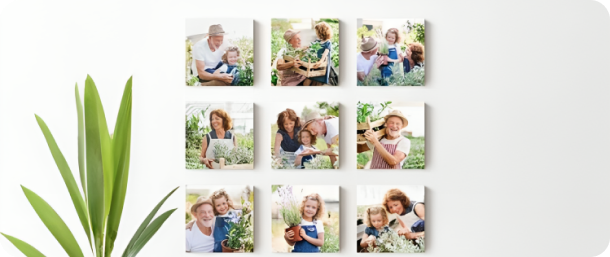
Transform Your Memories with Photo Tiles
Photo tiles have quietly become one of the most beloved ways to personalize a living space. Unlike traditional framed prints that require hammers, nails, and careful measurements, these lightweight adhesive panels slip onto walls in seconds and come down just as easily without leaving a mark. They sit at a perfect intersection of convenience, affordability, and genuine visual impact, which is why millions of households around the world have embraced them as a go-to decorating solution. Whether you live in a rented apartment where damage deposits loom large or own a home you want to update seasonally, photo tiles offer a flexibility that almost nothing else on the market can match.
What makes them even more appealing is how deeply personal they can be. Every photograph carries a story, a feeling, a frozen moment in time that meant something to the person who pressed the shutter. When those images leave the private darkness of a phone gallery and appear on a wall, they take on new weight. They invite conversation, spark memory, and turn a blank surface into something that speaks unmistakably about the people who live in that space. Photo tiles are not merely a decorating trend; they are a way of insisting that the best parts of your life deserve to be seen.
Why Walls Tell Stories
Walls are the largest blank canvases inside any home, yet they are often the last surface people think to fill with intention. A painted color can set a mood, but it cannot communicate a specific memory. A generic piece of mass-market art can be visually pleasant, but it has no relationship to the person looking at it. Photo tiles solve both problems simultaneously by combining the visual presence of wall art with the emotional resonance of personal photography. The result is something that feels curated rather than purchased, crafted rather than merely decorated.
The psychology behind displaying photographs at home is well documented. Studies in environmental psychology consistently show that personal imagery in a living space increases feelings of comfort, belonging, and emotional well-being. When you catch a glimpse of your grandmother's smile or a mountain trail you hiked three summers ago, that image does not just register as pretty; it reconnects you, however briefly, to something that mattered. Multiplied across an entire wall or hallway, that effect becomes cumulative and genuinely powerful. Photo tiles are an efficient vehicle for delivering all of that emotional payload.
Selecting the Right Photographs
The quality of a finished tile display begins long before anything is ordered or hung. It begins with the photographs themselves, and the choices made at this stage shape everything that follows. Many people instinctively reach for the most technically perfect images in their collection: sharp focus, good exposure, balanced composition. While technical quality matters, it should never be the only filter. Sometimes the slightly blurry photograph taken at a concert, where the faces are warm and the joy is unmistakable, tells a far richer story than a perfectly composed portrait taken under controlled light.
Think in terms of emotional range when building a collection for tile printing. A wall that features only formal portraits can feel stiff, while one filled exclusively with candid snapshots might lack visual anchors. The most compelling displays mix both: a few photographs that are visually striking from a distance, serving as focal points, and others that reward closer inspection because of the stories they hold. Consider the colors present across your selection as well. Images with complementary tones tend to hold together naturally on a wall, even when their subjects are completely different.
Arrangement Styles Worth Considering
Once photographs are selected and tiles are printed, the question of arrangement takes center stage. This is where many people feel most uncertain, but it need not be intimidating. The simplest and most reliably successful approach is the grid: tiles placed in uniform rows and columns with equal spacing between them. A grid arrangement works in almost any room because it respects the geometry of the space. It feels ordered without being sterile, and it makes adding or removing tiles later very easy. Four rows of four, or three rows of five, are formats that fill a wall satisfyingly.
A gallery wall is a looser, more organic alternative. Here tiles of potentially different sizes are arranged around a central anchor image, with spacing that varies intentionally. This style works particularly well in living rooms, hallways, and staircases where architectural angles already create some visual complexity. For those who prefer something more conceptual, a storyboard arrangement presents photographs in a sequence that unfolds chronologically or thematically, almost like turning the pages of a photo book but in three-dimensional space. Each of these formats suits different personalities and different rooms, and none of them requires professional design knowledge to execute well.
Room-Specific Display Approaches
Not every room in a home calls for the same treatment when it comes to photo tiles. The living room is typically the most social space and benefits from a display that invites guests into the narrative of the family. A large focal wall with a dozen or more tiles, mixing portraits with landscapes and candid moments, creates an immediate sense of character. The bedroom, by contrast, is more intimate. Fewer tiles, chosen for their calming emotional resonance rather than their storytelling complexity, tend to work better above a headboard or on the wall a person faces when they first wake.
Children's rooms are among the most rewarding spaces for photo tiles precisely because they can be changed as the child grows. A nursery display celebrating a new arrival can evolve into a collection of birthday parties and school adventures, then into a teenager's curated wall of friends and travels. Hallways and staircases, often overlooked, are ideal corridors for chronological arrangements that walk viewers through family history. Even kitchens and home offices can benefit from a small cluster of tiles chosen for the energy they add rather than the story they tell.
Printing Quality Differences
Not all photo tile services produce equivalent results, and understanding where quality differences originate helps in making better decisions. The substrate matters enormously. Photo tiles are printed on materials ranging from thin foam board to thick aluminum composite, and the rigidity and weight of the base affects how the finished piece reads on a wall. Thin or flexible tiles tend to bow slightly over time, which catches light unevenly and creates visible distortion. Sturdier materials hold flat and reflect light consistently, giving the image a more professional presence.
Print resolution is the other major variable. Consumer-grade tiles printed at low resolutions may look acceptable on screen during the preview stage but appear soft or pixelated when viewed up close on a wall. Higher-resolution printing preserves fine detail, skin texture, and the subtle tonal gradations that give a photograph its depth. Color calibration matters too. Some services print cool, others warm, and the difference becomes very obvious when tiles from different orders are placed side by side. When possible, ordering a single test tile before committing to a large display allows for comparison against the original photograph before a significant purchase is made.
Adhesive Systems and Wall Safety
One of the signature appeals of photo tiles is their adhesive mounting system, which promises installation without tools and removal without damage. However, the specifics of how these systems perform vary significantly between products and surfaces. Most premium tile services use a version of the same repositionable adhesive technology found in removable mounting strips, where a foam core compresses under pressure and grips a smooth surface reliably. On a freshly painted wall with an eggshell or satin finish, this system typically performs exactly as advertised for tiles of moderate weight.
Problems tend to arise with heavier tiles on matte or flat paint finishes, which have a slightly porous surface that reduces adhesive contact area. On textured walls, the adhesive may only touch the peaks of the texture and therefore lack the grip needed to hold securely over months and years. Before committing to a full display, testing the adhesive system in an inconspicuous area of the actual wall is always worthwhile. For heavier tiles or permanent displays, a small amount of picture-hanging adhesive added as a secondary layer can provide peace of mind without compromising eventual removal.
Gift-Giving Possibilities
Photo tiles have become one of the most genuinely well-received gifts across a wide range of occasions, and for good reason. They occupy a space that few other gifts do: personal enough to feel thoughtful, practical enough to be displayed rather than stored, and visually impactful enough to register as meaningful the moment they are unwrapped. A set of tiles featuring photographs from a shared trip given to a travel companion, or a collection of childhood images given to a parent for a birthday, communicates a level of consideration that generic gifts rarely approach.
The gift-giving application extends naturally to milestone occasions. Wedding gifts can include a set of tiles from the couple's relationship history, documenting the journey from early dates through to the engagement. Retirement gifts can celebrate a career's worth of accomplishments and colleagues. New homeowner gifts feel especially appropriate, since a new home often has many blank walls waiting for exactly this kind of personal touch. Even baby shower gifts featuring images from the expecting parents' relationship offer a warm and forward-looking gesture.
Seasonal and Rotating Displays
One advantage that photo tiles hold over traditional framed art is the ease with which they can be rotated, removed, and replaced. This makes them well suited to seasonal display strategies that would be impractical with heavier or more permanently installed artwork. A summer display featuring beach and garden photographs can give way to autumn images as the year turns, then to winter holiday memories, then to spring colors. The same wall serves a different emotional function each season without any repainting, replastering, or significant expense.
Rotating displays also solve the problem of walls that feel stale over time. Even beloved photographs lose some of their visual impact when they have been in exactly the same position for years. Cycling different images in and out of a display keeps the wall feeling fresh and draws renewed attention to photographs that might otherwise fade into the background of daily life. Some households treat their tile wall almost like a living document, adding new images after significant events and periodically reorganizing older ones to create new combinations and conversations between photographs.
Digital Preparation Before Ordering
The gap between a photograph that looks good on a phone screen and one that prints beautifully on a tile comes down almost entirely to digital preparation. Phone cameras produce images in a wide range of resolutions depending on the model and the camera settings used, but many default to producing files that are compressed for storage efficiency rather than optimized for print. Before uploading photographs to a tile printing service, reviewing their resolution at the intended tile size is a step that prevents disappointment. As a general rule, an image intended for a twelve-inch tile should have at least 1,200 pixels on its shortest side, with more always being preferable.
Basic editing before uploading also pays dividends. Photographs often benefit from slight adjustments to brightness and contrast that account for the difference between how screens display light and how prints appear under ambient room lighting. Screens emit light; prints reflect it. An image that looks perfectly exposed on a phone display may appear slightly dark and flat when printed. Lifting the midtones slightly and adding a small amount of contrast before uploading compensates for this predictable difference. Most photo editing apps on phones offer these adjustments in an approachable interface, and even modest tweaks make a noticeable difference in the finished tile.
Black and White Tile Collections
Color photography dominates most tile displays, and understandably so, because color is one of the most immediate ways that photographs convey mood and atmosphere. However, black and white photography occupies a special territory that deserves consideration for certain types of displays. Converted thoughtfully, color images gain a timelessness in monochrome that color versions often lack. Subjects who might look dated in the fashions or hairstyles of a particular decade appear more universal and enduring when those temporal details are rendered in shades of gray.
A display that mixes black and white tiles with color ones can be visually sophisticated without requiring any special expertise. The black and white images naturally draw the eye differently than color images do, and when distributed thoughtfully across a grid or gallery arrangement, they create visual rhythm and prevent any single tile from dominating. Some decorators commit entirely to monochrome displays, particularly in spaces like home offices or minimalist living rooms where a restrained color palette is already part of the design language. These all-black-and-white walls often photograph beautifully and hold their impact over years in ways that trend-sensitive color palettes sometimes do not.
Photo Tiles in Commercial Spaces
The application of photo tiles is not limited to residential settings. Small businesses, particularly those in service industries where atmosphere contributes meaningfully to the customer experience, have found thoughtful ways to incorporate personal photography into their environments. A family restaurant displaying tiles of the family's history and culinary traditions creates an authentic narrative that no stock art can replicate. A yoga studio featuring images of community events and student milestones builds a sense of belonging that generic wellness imagery cannot provide.
Professional photography studios use tile displays as both decoration and portfolio, covering entire walls with samples of their work in a format that clients can approach and examine without the distance that framed glass creates. Real estate staging companies have begun incorporating temporary tile displays into furnished properties to add warmth and personality during the sales period, then removing them cleanly when the property sells. Even corporate offices have found that tile displays featuring employee milestones, team events, and company history communicate culture to new hires and visitors more immediately than any mission statement framed on a wall ever could.
Budget Planning for Larger Displays
A common experience among people who discover photo tiles is initial enthusiasm followed by a moment of pause when tallying the cost of a large display. Individual tiles are modestly priced, but a wall requiring twenty or thirty of them represents a meaningful purchase. Planning a budget in advance, and making deliberate choices about which tiles to prioritize, makes the process significantly more satisfying and prevents the disappointment of running out of resources before a wall feels complete.
One practical approach is to begin with the tiles that will serve as visual anchors, typically the largest or most emotionally significant, and build around them incrementally over time. Many services offer bundle pricing that reduces the per-tile cost significantly when ordering in larger quantities, making it worthwhile to plan the full display in advance even if the order is placed over several installments. Others offer periodic promotions that reward flexibility in timing. Keeping a wish list of images earmarked for future tiles means that when a sale arrives, decisions can be made quickly and confidently rather than requiring fresh deliberation under time pressure.
Care and Long-Term Maintenance
Photo tiles are more durable than they might initially appear, but they benefit from modest care that preserves their appearance over the years. Dust accumulates on tile surfaces just as it does on any other wall art, and periodic gentle cleaning prevents a gradual dulling of the image. A soft microfiber cloth used dry removes dust without the risk of introducing moisture that could affect the print surface or the adhesive backing. For more stubborn marks, a barely damp cloth followed immediately by a dry one cleans effectively without damage.
Direct sunlight is the most significant long-term threat to printed surfaces of any kind, including photo tiles. Ultraviolet light breaks down the pigments in printed images over time, causing colors to fade and shift in ways that are irreversible. Positioning tiles away from windows that receive hours of direct sunlight each day significantly extends their useful life. In rooms that unavoidably receive strong direct light, UV-filtering window film applied to the glass can protect both tile displays and any other artwork or furniture in the space. With modest attention, a well-maintained tile display looks as fresh after five years as it did on the first day it was hung.
Conclusion
Photo tiles represent something more than a convenient alternative to traditional framed art. They represent a thoughtful answer to a question that most people feel at some point in their lives but rarely articulate clearly: what should the walls of a home actually say? The answer that photo tiles propose is simple and compelling. They should say something true about the people who live there. They should hold the moments that mattered, the faces that are loved, the places that changed something in the way a person sees the world. They should function not as decoration in the abstract sense but as daily touchpoints to the experiences that gave a life its particular shape and texture.
The versatility of photo tiles makes them accessible to an unusually wide range of people with different budgets, different aesthetic preferences, different living situations, and different relationships to photography. Whether someone approaches them as a serious design project, carefully curating a thirty-tile gallery wall that anchors an entire living room, or simply orders a handful of tiles to add warmth to a previously bare corner, the result carries the same fundamental truth: these are the moments I chose to hold onto. That act of choosing is itself meaningful.
In a world that produces more images every day than any previous era in human history, the decision to select a handful of those images and give them a permanent, physical presence on a wall is a small but genuine act of intention. It says that among the overwhelming flood of photographs drifting through phones and hard drives and social media feeds, these particular ones were worth printing, worth hanging, worth seeing every day. Photo tiles make that declaration easy, affordable, and visually beautiful in a way that honors both the technology behind them and the memories they carry. They turn the ordinary architecture of a home into something that reflects the extraordinary particularity of the life lived inside it, and that is a purpose worth serving well.