
Celebrate Your Story on Canvas – One Memory at a Time
Whether it's a milestone, a memory, or a simple joy, we’re here to make it a lasting part of your home.
-

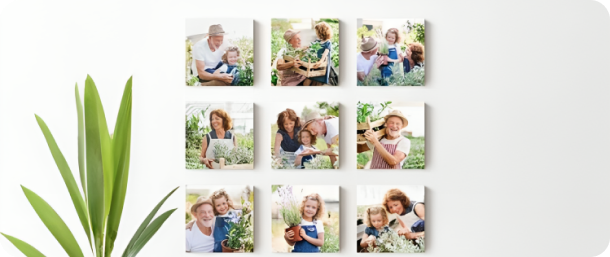
Add Photos
-

We Deliver
-

You Stick


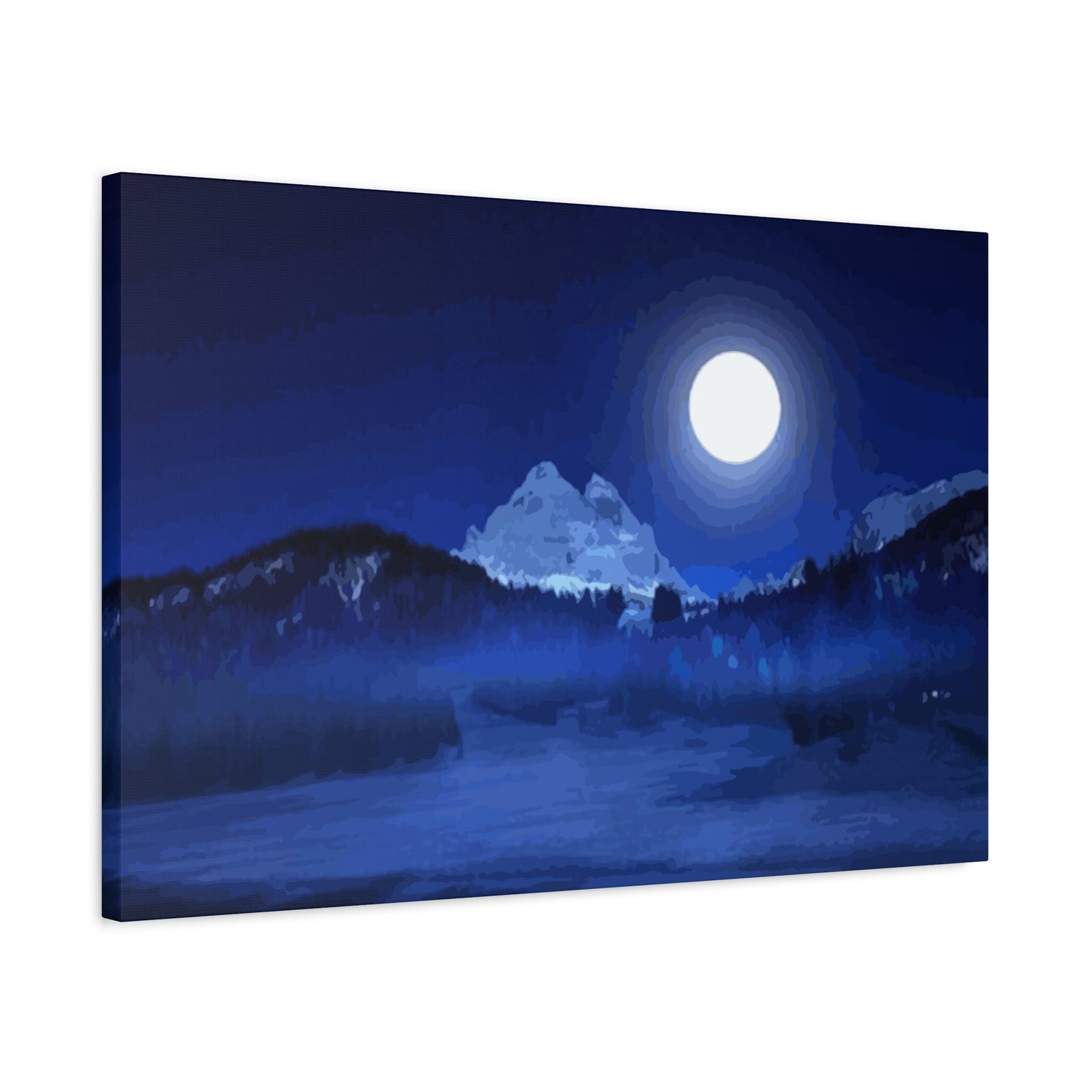
Or Select From Our Wide Range of Collections
Turn your favorite phone pics into prints that stick and restick.
They’re removeable, reusable, and leave no marks.
How it Works
-

1
Upload a photo or choose from our canvas
-

2
The art is printed and shipped to you

Happiness Guaranteed

Reviews That Made Our Day
Up to 40% off + Free Shipping
“I was impressed with the quality of the canvas prints from Prints4Sure. The colors are vibrant, and the image clarity is excellent—true to what I uploaded. The materials feel durable, and they arrived in perfect condition.”

“I love that I can rearrange them without damaging my walls, and they’re perfect for renters or anyone looking for a hassle-free personal story décor solution. They adhere well and are easy to reposition."
“I wanted to create a keepsake for my grandparents’ 50th wedding anniversary. I uploaded a photo from their wedding day and added one from a recent family gathering for a ‘Then and Now’ theme. The detail was beautiful, and it was so clear despite the older photo."
“I recently got married, and my husband and I ordered a large canvas of our favorite wedding photo from Prints4Sure. When it arrived, I almost cried—everything looked stunning, from the clarity of our faces to the warmth of the colors."
-

Rated 4.9 on the Appstore
Based on 80,000+ Reviews
-

-

Rated Excellent on Trustpilot
Based on 10,000+ Reviews


Celebrate Your Story on Canvas – One Memory at a Time
Every person carries a collection of moments that shaped who they are today. These moments live inside the mind, sometimes fading with time, sometimes staying sharp as glass. Turning those memories into art is one of the most meaningful ways to honor what you have lived through. A canvas is not just a surface. It is a container for emotion, for color, and for everything that words sometimes fail to say. When you commit a memory to canvas, you are doing something powerful. You are saying that this moment mattered enough to last forever, beyond photographs and beyond journals, hanging on a wall where anyone who enters your space can feel a piece of your world.
Art made from personal memory carries a warmth that no generic print ever can. A painting of the street where you grew up, the hands of your grandmother, or the window seat where you spent rainy afternoons as a child holds life inside it. It speaks without speaking. It connects people who see it to you in ways that ordinary decoration simply cannot achieve. When memory becomes art, it stops being something that only lives in your head and becomes something the whole world can witness, admire, and even feel moved by. This is the true power of celebrating your story on canvas.
The Language of Personal Imagery
Every person has a visual vocabulary that is entirely their own. It is made of faces, places, colors, and light conditions that carry emotional weight from lived experience. The smell of rain on hot pavement, the particular shade of yellow in a childhood bedroom, the way someone's smile looked in afternoon light — these things translate into image more naturally than most people realize. Personal imagery is not about technical skill alone. It is about honoring what the eye of memory holds and finding ways to carry that onto a physical surface where it can breathe and be seen by others.
When you approach canvas with imagery pulled from your own life, the result is immediately different from reference-based work. There is a trembling authenticity in it. The proportions may not be perfect, the perspective may shift, but the emotional truth rings clearly through every brushstroke. Viewers do not need to know your story to feel that what they are looking at is real. Personal imagery brings that quality into the room. It tells the audience that this was not imagined or invented, it was remembered, and memory is one of the most honest things a human being can put into paint.
Choosing Which Moments to Paint
Not every memory carries equal visual weight. Some moments feel monumental when you relive them but resist translation into image. Others seem small until you begin to sketch them out, and suddenly something in the composition unlocks an entire emotional landscape. Choosing which moment to paint is its own creative act. It requires sitting quietly with your memories, letting them surface without forcing them, and paying attention to which ones arrive with color and light already attached. Those are the ones that are ready to become art.
A useful way to begin is to think about the memory that visits you most often. Recurring memories usually carry something unresolved or deeply cherished, and that emotional charge gives the painting energy before the first mark is made. You might also think about the moments that changed you quietly, without fanfare, the ones nobody else witnessed. A stolen hour of silence. A conversation that shifted something inside. A view from a specific window at a specific time of year. These intimate scenes often become the most resonant paintings because they carry the weight of something real and private becoming visible for the first time.
Color as Emotional Archive
Color is one of the oldest and most reliable tools for communicating what cannot be spoken. When you paint from memory, color becomes even more important because it is rarely accurate and almost always emotionally true. You may remember your childhood kitchen as warmer and more golden than any photograph would confirm, because in your memory the light is saturated with safety and belonging. That emotional color is the one worth painting. Accuracy to physical reality matters far less than accuracy to feeling when you are working with personal memory.
Building a personal color palette before you begin a memory-based painting is one of the most helpful things you can do. Sit with the memory and ask yourself what colors live inside it. Not just the colors of objects, but the overall temperature and tone of the moment. Was it cool and silver? Warm and amber? Saturated and loud? Muted and grey? Once you have that emotional palette in mind, you can mix your paints deliberately rather than reaching randomly for tubes. The result will be a painting that feels unified and true, even if no single color in it matches the literal scene.
Texture and Touch in Storytelling
Texture in painting does what texture does in life. It invites the hand as much as the eye. When you recall a memory, you often recall its physical qualities without realizing it. The roughness of a worn wooden table, the softness of a favorite blanket, the slick coolness of a windowpane in winter — these tactile memories want to be part of the artwork. Using texture deliberately allows you to bring a sensory dimension into the piece that color and form alone cannot provide. Viewers feel texture even before they consciously register it, and that feeling communicates something deep and immediate.
Applying texture to a memory-based canvas can be done in many ways. Heavy brushwork with a palette knife can evoke rugged surfaces and raw emotion. Layering paint in thin washes can create the delicate, translucent quality of light through curtains or water through glass. Adding material to the surface, such as fabric, sand, or paper, can bring a literal piece of the remembered world into the artwork. However you choose to work with texture, the key is to let it serve the emotional content of the memory. Texture is not decoration. In a memory painting, it is evidence.
Composition Follows Feeling
Composition is the architecture of a painting, the arrangement of elements that directs the viewer's eye and shapes the overall feeling of the piece. In traditional painting instruction, composition is taught through grids, rules, and geometry. When painting from memory, those tools are still useful, but they must serve emotion rather than override it. The way a memory is arranged in your mind is rarely symmetrical or balanced. It is often centered on one bright point, surrounded by blur. That is a perfectly valid composition, and it may be exactly the right one for the story you are telling.
When you begin placing elements on the canvas, follow the logic of what felt most important in the moment. If the entire memory is really about one person's face, let that face dominate the canvas even if it breaks conventional rules about proportion. If the memory is about absence, consider what you leave out as much as what you include. Empty space is a compositional choice with enormous emotional power. The goal is to arrange the painting so that a viewer's eye travels the same emotional journey that your memory takes when you revisit it, arriving at the same point of feeling that the original moment created.
Light Carries the Memory's Mood
Light is the single most powerful element in any painting, and in memory-based work it becomes the emotional backbone of the entire piece. The way light fell in a specific moment is often the first thing that makes a memory recognizable as a memory. Morning light through a kitchen window has a quality entirely different from afternoon light in a park or lamplight in a late-night room. Each of those light conditions carries a mood, and that mood is part of what you are painting when you paint a memory. The light is not background. It is the emotional atmosphere of the moment made visible.
Studying light as it exists in your memories means paying attention to direction, temperature, and intensity. Where was the light coming from? Was it hard and defined, casting sharp shadows, or soft and diffused, wrapping everything in an even glow? Was it warm and golden or cool and blue? Answering these questions before you begin gives you a lighting plan that serves the emotional truth of the memory. Painting the light accurately to feeling rather than to fact is one of the most effective ways to make a viewer feel what you felt when the original moment happened.
Small Details Hold Big Truths
In memory, the strangest details survive. You may not remember the full scene of an important occasion, but you remember the particular way someone held their coffee cup, or a crack in the wall above the door, or the pattern on a tablecloth that you stared at during a difficult conversation. These small details are not irrelevant to the larger story. They are often the center of it. Painting them with care and specificity transforms a personal memory into a piece of art that feels deeply, strangely true even to viewers who have no connection to the original scene.
Giving attention to small details in a memory painting requires a certain kind of patience and courage. It means resisting the urge to generalize and instead committing to the specific. That specific tablecloth pattern, that specific crack, that specific gesture. Specificity in art is paradoxically what makes work universal. When you paint something with enough honesty and exactness, it stops being only yours and begins to belong to everyone who has ever had a moment just like it. The particular becomes the general. The private becomes shared. And that is precisely where personal memory becomes genuine art.
When Grief Becomes a Canvas
Some of the most powerful paintings in human history were made from grief. Loss sharpens the senses and strips away everything that is not essential, leaving the artist with nothing but what truly mattered. Painting a memory connected to grief is one of the most courageous things a person can do, because it requires sitting inside the loss long enough to translate it into form and color without flinching. The canvas becomes a place where the person or moment that is gone can exist again, made permanent by paint, held safely in the material world.
Working through grief on canvas does not mean the painting must be sad. Some of the most joyful paintings are made in honor of someone who has died, because the artist chooses to paint the memory of happiness rather than the fact of absence. Others go directly into the darkness and come out the other side with something raw and true and almost unbearably beautiful. There is no wrong way to grieve on canvas. The only requirement is honesty. Whatever the loss, whatever the memory, if you bring it to the canvas without pretending, the painting will carry the truth of it and offer something back to you in return.
Painting Joyful Moments Deliberately
Just as grief deserves a place on canvas, so does pure uncomplicated joy. The problem is that joy is often harder to paint than sorrow. Grief comes with dramatic visual content, dark colors, heavy textures, and emotional weight that translate readily into image. Joy can feel light and diffuse, difficult to pin down, easily sliding into sentimentality if not handled with care. Painting joy requires as much intention and craft as painting loss, because joy without depth becomes decoration, and what you are after is art that carries real feeling.
The best way to paint joy is to paint the specific circumstances that produced it rather than joy itself as an abstract quality. You do not paint happiness. You paint the afternoon on the hill where everything felt right, the birthday kitchen full of steam and laughter, the quiet moment after a long day when you realized you were exactly where you wanted to be. Joy lives in those specifics, and when you paint those moments honestly, the joy arrives on the canvas naturally, without having to be forced or performed. The viewer feels it because you painted the truth, and truth always carries feeling in its wake.
Memory and Identity on Canvas
Painting your memories is also an act of identity. The moments you choose to paint, the way you render them, the colors you reach for — all of these things reveal who you are in ways that feel both intimate and universal. A series of memory-based paintings over time becomes a visual autobiography, a portrait of a life told in scenes, moods, and recurring motifs. When you stand back and look at a body of work built from personal memory, you often see patterns you had not consciously noticed: recurring colors, recurring figures, recurring qualities of light that speak to something deep and consistent in your inner life.
This autobiographical quality gives memory-based painting a value that extends beyond the aesthetic. It is a form of self-knowledge. As you paint, you discover what you have kept and what you have let go, what still moves you and what has lost its charge. Some memories, once painted, release their hold on you. Others deepen in meaning through the act of translation into image. Either way, the canvas becomes a place where you meet yourself honestly, without the filters and performances that daily life requires. That meeting is one of the most valuable things any creative practice can offer.
Sharing Stories Through Exhibition
Once you have a body of memory-based work, the question of sharing it arises. Showing personal paintings is a vulnerable act. You are not just showing objects. You are showing pieces of your life, rendered visible in ways that leave nothing hidden. But that vulnerability is precisely what makes memory-based exhibitions so powerful for audiences. Viewers do not walk through a gallery of personal paintings the way they walk through a gallery of landscapes or still lifes. They lean in. They slow down. They feel the presence of a life being offered to them without reservation.
You do not need a formal gallery to share your work. A living room, a community space, a rented hall, or even an online platform can serve as the setting for a meaningful showing of personal paintings. What matters is that the work is seen by people who are willing to look slowly and feel something. Writing brief notes about each painting, not explanations but impressions and fragments of the memory, can deepen the viewer's experience enormously. When people understand that what they are looking at is a real moment from a real life, the emotional impact multiplies. The work becomes not just painting but testimony.
Memory Painting as Healing Practice
Art therapy has long recognized the healing power of putting personal experience into visual form. You do not need a therapist to access this power. Simply picking up a brush and committing a difficult memory to canvas can begin a process of integration and release that talking about the memory rarely achieves. The hand knows things the mouth does not. The body remembers in its own language, and painting gives that language a form. Something about the slow, physical act of putting marks on a surface while holding a memory in mind allows the nervous system to process what words leave unfinished.
This does not mean memory painting is always comfortable. Sometimes it surfaces things you were not prepared to feel. Sometimes a painting session leaves you tired and raw rather than refreshed. That is part of the process, and it is not something to avoid. The discomfort usually means the work is honest and the memory is being genuinely engaged rather than decoratively managed. Giving yourself permission to make difficult paintings, to sit with the feeling they produce, and to return to the canvas the next day is how the practice deepens over time. What begins as a single painting of a single memory can grow into a whole way of being with yourself.
Children and Family Memory Art
Memory painting is not solely the territory of adults working through complex emotional material. Families and children can take part in this practice in ways that are joyful, connective, and deeply meaningful. Inviting a child to paint their favorite memory is one of the most revealing things you can do, because children paint with absolute honesty, with no concern for technique or approval. The result is always surprising and always true. A child's painting of a family holiday, a pet, or a particular afternoon in the garden carries a freshness and directness that can remind adult artists what they are really after.
Family memory projects, where different generations paint the same shared event from their own perspective, produce an extraordinary result. The same birthday dinner, the same summer trip, the same ordinary Sunday painted by a grandparent, a parent, and a child produces three completely different images that are equally true. Hanging them together tells a richer story than any single painting could. This kind of collaborative memory work strengthens family bonds, preserves history, and produces art that will be treasured for generations. It also teaches children early that their memories and perspectives have value worth preserving.
Working With Old Photographs
Old photographs are one of the richest sources for memory-based painting because they hold visual information from moments that would otherwise exist only in the imprecision of recollection. A photograph from your parents' youth, from a grandparent's wedding, or from an event that happened before your own memory began contains a world of detail that can be brought into paint with care and imagination. Working from an old photograph is different from copying it. It means using the photograph as a starting point and then painting the emotional content that the image carries, which is often far larger than the image itself.
When you paint from an old family photograph, you are doing something intimate and courageous. You are saying that this frozen moment deserves to be alive again, rendered in paint rather than fixed in silver and paper. You bring your own feeling for the people in the image, your own relationship to the era and the story, into the way you handle the color and composition. The result is always more than a reproduction. It is an interpretation, a loving re-encounter with a moment that shaped the world you came into. That is a profound and worthy use of canvas, paint, and the time you have been given.
Building a Legacy in Paint
The paintings you make from your own memories do not belong only to you. They belong to everyone who comes after you. Artwork made from personal memory is one of the most enduring forms of legacy a person can leave behind. Long after the people who shared the original moments are gone, the paintings remain. They carry the emotional content of a life into the future in a form that does not fade the way memory does, does not distort the way stories do as they pass from person to person, does not lose its power the way objects often do when removed from context.
Building a legacy in paint means working with intention over time. It means treating each canvas not as a casual exercise but as a genuine contribution to a record of your life as you lived it and felt it. Even if you never show the work publicly, the paintings will speak for you after you are gone. Whoever inherits them will inherit something irreplaceable: the visual record of a specific human consciousness moving through specific moments in time. There is no greater gift you can give to the people who come after you than the honest evidence that you were here, that you felt things, that the moments of your life were worth preserving in paint and color and the truest language you had.
Starting Your First Memory Painting
Beginning is always the hardest part. The blank canvas carries with it all the pressure of everything you want to express and all the fear that you will not be able to express it well enough. The most useful thing to know before you begin your first memory painting is that the goal is not perfection. The goal is contact. Contact with the memory, contact with the feeling, contact with the paint and the surface. Perfection is a distraction from the real work, which is presence. If you can be present with the memory and present with the canvas at the same time, the painting will take care of itself.
Set aside a single afternoon. Choose a memory that feels manageable, not the most painful or the most complicated, but one that carries warmth and clarity. Gather your materials without overthinking them. Begin with a sketch, loose and quick, just to place the key elements. Then begin to paint, letting the color come from feeling rather than observation. Do not stop to judge the work. Keep moving, keep feeling, keep placing marks until the session is done. Then step back and look at what you made. You will almost certainly find that something honest arrived on the canvas, something that belongs to you and no one else. That is your story, told in paint. That is the beginning of everything.
Your Story Belongs on Canvas
There is a common belief that only trained artists, only people with formal skills and professional credentials, have the right to put their stories on canvas. This belief is false, and it has silenced countless people who had something genuine and irreplaceable to express. Your story does not require permission. It does not require a degree or a gallery or anyone's approval. It requires only your willingness to begin, your honesty with the material, and your respect for the moments that made you who you are. The canvas is ready. The paint is ready. The memory is already there, waiting to be honored in the only way that will preserve it forever.
Every painting you make from your own life adds something to the great human conversation about what it means to be alive. The conversations that matter most in art are not the ones held in expensive galleries between critics and collectors. They are the ones held between a painting and a viewer who recognizes in it something they have never been able to say themselves. Your memory painting, your specific and honest rendering of a moment from your specific and unrepeatable life, has the power to reach someone that way. It has the power to make a stranger feel less alone, less unseen, less certain that their own memories are too small or too private to matter. Paint your story. The world needs it exactly as it is.
Conclusion
The practice of painting personal memories is one of the most ancient and most human activities a person can engage in. From the very first marks made on cave walls by hands reaching toward something they wanted to hold onto, human beings have known that image is the most reliable vessel for experience. Not words, not objects, not even the mind itself, but image, held in a physical form that can outlast the person who made it. When you paint your memories, you are participating in that oldest and most essential of human impulses: the refusal to let what mattered simply disappear.
What makes memory painting so worthy of time and attention is not only what it produces but what it does to the person practicing it. Each session spent in honest engagement with a personal memory brings you into closer relationship with your own life. You begin to see your history not as a series of events that happened to you but as a rich and layered visual world that you carry everywhere, a world full of color and light and texture and feeling that belongs entirely to you. That world deserves to be seen. It deserves to be rendered and honored and shared. It deserves the respect of paint and canvas and the quiet hours it takes to bring it fully into the visible world.
Painting from memory is also an act of gratitude. When you take the time to paint a moment, you are acknowledging that the moment was worth something. You are saying thank you to the people who were in it, to the place where it happened, to the light that fell just so, to whatever combination of circumstances produced that specific pocket of feeling that stayed with you long enough to become a painting. Gratitude expressed in art is one of the most generous things a person can do, because it produces something beautiful that others can share. The painting carries the gratitude forward, long after the words for it have run dry.
As you build a practice of memory-based painting, you will find that the relationship between your life and your art becomes less like two separate things and more like one continuous conversation. The memories feed the paintings, and the paintings change the way you hold the memories. Things that once felt too heavy to carry begin to feel like something you can look at. Things that once felt too fragile to touch begin to feel solid enough to share. The canvas does something that time alone cannot do: it transforms the raw material of lived experience into something that lasts, something that gives, something that speaks across whatever distance separates you from the people who will one day stand in front of your paintings and feel, without knowing why, that they are standing in the presence of a life fully and honestly lived.
Every moment you have ever lived deserves its canvas. Every face, every room, every afternoon, every grief, every small joy, every turning point, every quiet ordinary day that was somehow also extraordinary — all of it is worth the paint. Start where you are. Start with what you remember. Start with the memory that will not leave you alone. Put it on canvas. Celebrate your story, one memory at a time, and trust that the act of doing so matters more than you can presently know.